Understanding Celiac Disease and Gluten Intolerance
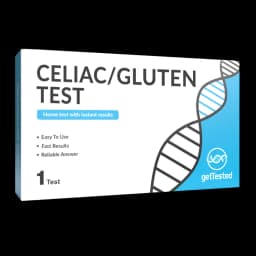
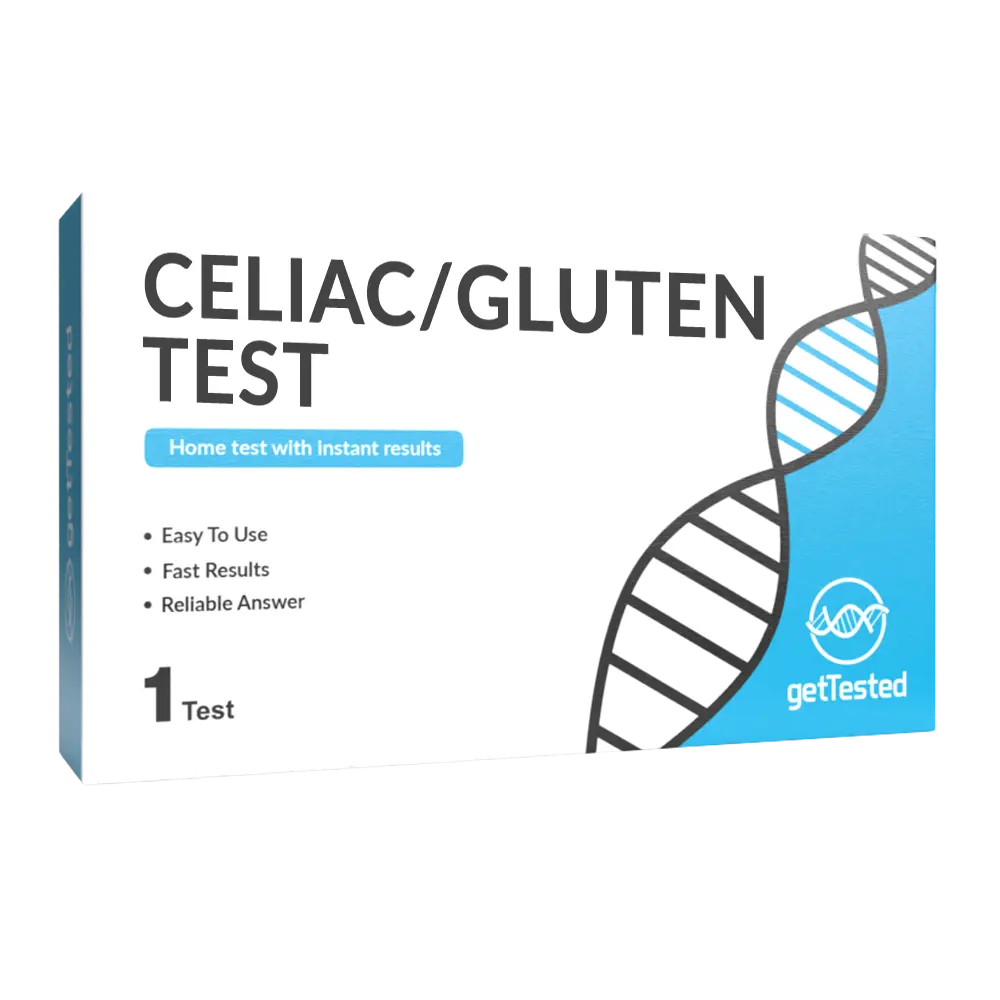
Celiac disease is an autoimmune disorder that causes chronic inflammation in the small intestine, often mistaken for gluten intolerance. It triggers symptoms such as diarrhea, weight loss, bloating, and skin issues due to an adverse reaction to gliadin, a component of gluten in wheat, barley, rye, and spelt. GetTested's Celiac/Gluten Intolerance Test is designed to identify this condition accurately.
GetTested's Celiac/Gluten Intolerance Test
This test targets antibodies against deamidated gliadin peptides (anti-DGP) of classes IgA and IgG, which are pivotal for diagnosing celiac disease. Early diagnosis through GetTested's Celiac/Gluten Intolerance Test can prevent further intestinal damage and associated health complications.
Rapid Testing at Home
GetTested's Celiac/Gluten Intolerance Rapid Test efficiently detects class IgA and IgG anti-DGP antibodies in your blood, indicating a potential celiac disease presence.
Common Nutrient Deficiencies in Celiac Disease
Celiac disease can lead to various nutrient deficiencies due to the damage it causes in the small intestine, affecting nutrient absorption. Key nutrients that individuals with celiac disease often find themselves deficient in include:
- Iron: Reduced absorption can lead to anemia, a common issue in celiac disease.
- Calcium and Vitamin D: Essential for bone health, deficiencies in these nutrients increase the risk of osteoporosis.
- Folate and Vitamin B12: Important for red blood cell formation, their deficiency can also result in anemia.
- Zinc: Necessary for immune function and skin health, zinc deficiency is common in individuals with celiac disease.
- Vitamin B6: Crucial for metabolism and brain function, a lack of Vitamin B6 can affect overall health and well-being.
Identifying and addressing these deficiencies through diet or supplementation is crucial for managing celiac disease and improving quality of life.
Exploring Additional Sensitivity and Intolerance Tests from GetTested
If you suspect celiac disease or gluten intolerance, other factors like allergies or various food intolerances could also be responsible for your discomfort. GetTested provides more tests, including:
- Allergy Test: Identifies allergies to 38 substances, including wheat, by finding IgE antibodies in your blood.
- Food Intolerance Test (80 Items): Checks for intolerances to 80 substances, such as wheat and gluten, by finding IgG antibodies.
What's Inside Your GetTested Test Kit
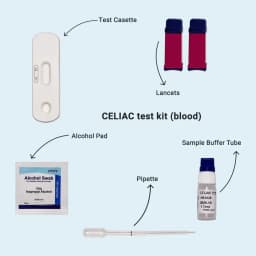
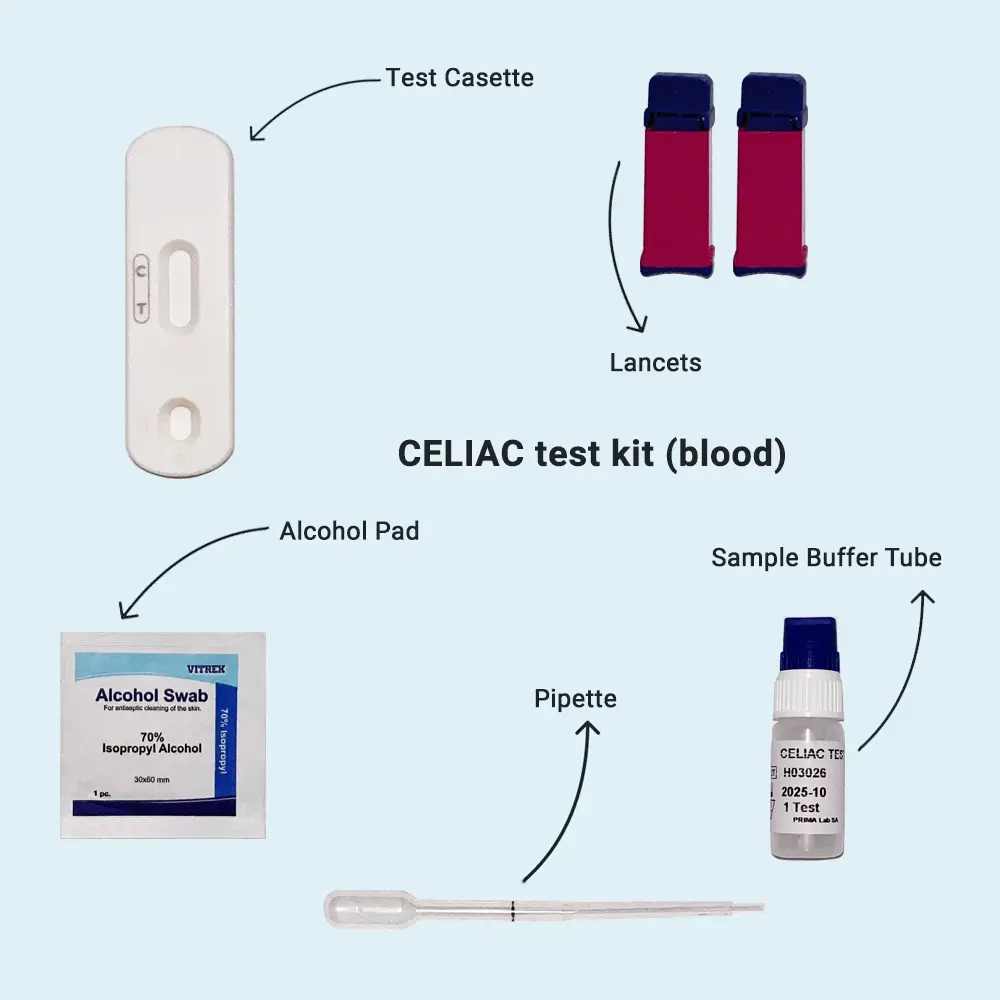
Your GetTested kit includes:
- A test cassette and a desiccant bag inside an aluminum bag.
- A plastic bag with a pipette for blood collection.
- An alcohol swab.
- Clear instructions for the test.
- A diluent in a dropper bottle.
- Sterile lancets for blood collection.
Using GetTested's Rapid Test
Follow the instructions carefully to use the sterile lancet and collect a small blood sample. Then, analyze it using the test cassette and the diluent.
Addressing Celiac Disease Globally with GetTested
Around 1% of the global population suffers from celiac disease. Due to varied symptoms, it often goes undiagnosed. Early detection and treatment with GetTested's Celiac/Gluten Intolerance Test are key for effective management. This proactive approach with GetTested ensures optimal health and well-being for those affected by celiac disease.





 In stock
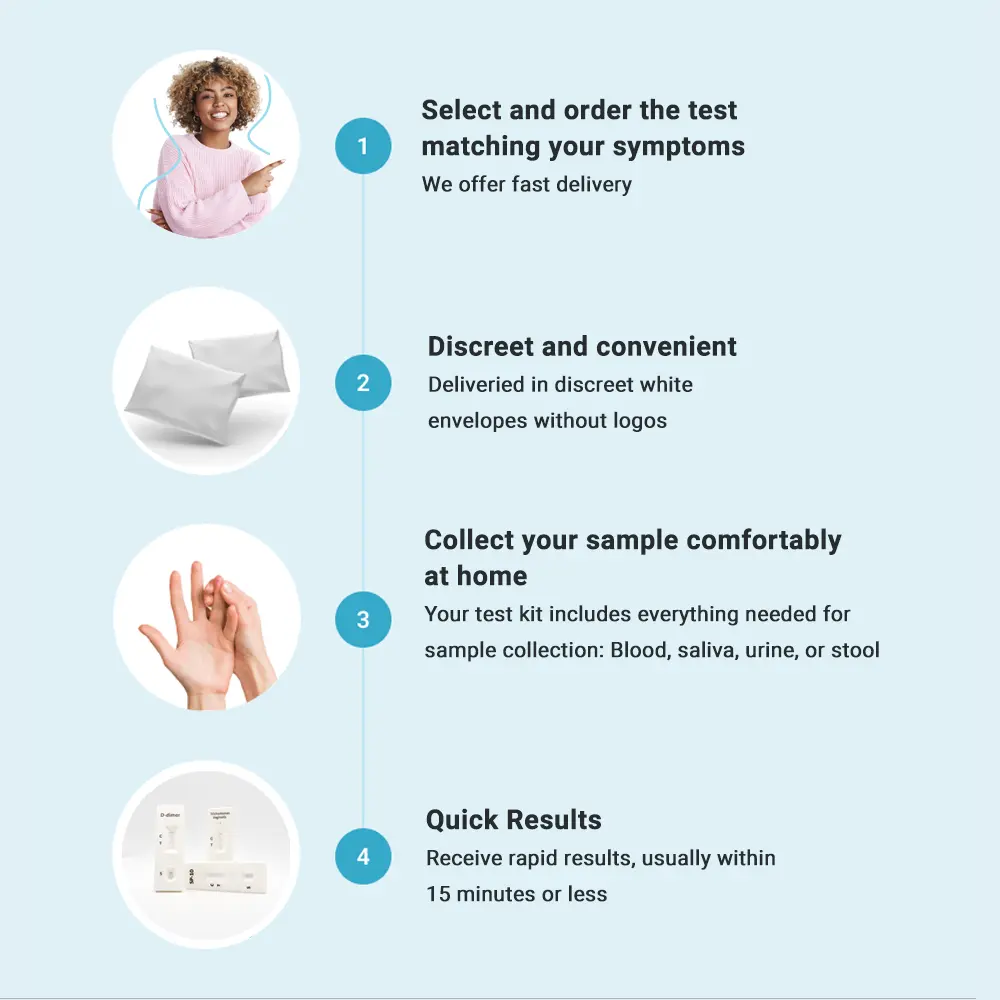
 Easy to use
 Fast Delivery