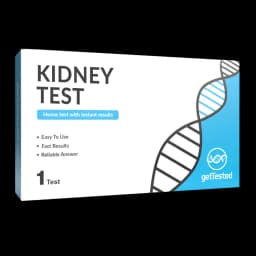
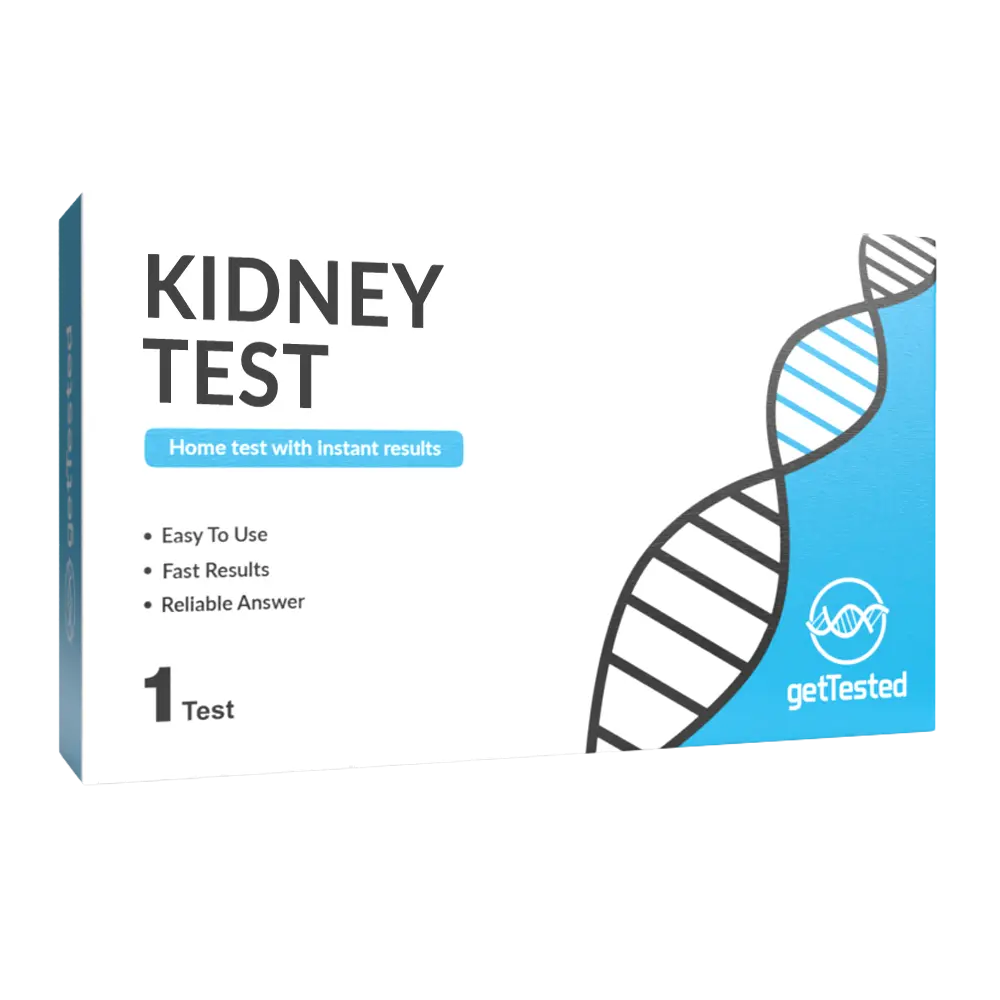
GetTested's Kidney test is a simple home test that you don't need to send to a lab for analysis; instead, you get immediate results. The kidney test measures creatinine, protein, and urine density via urine, and the test result is shown by visually comparing it with a color chart found inside the packaging.
About the Kidneys
The kidneys filter waste products and excess water from your blood, producing urine as a result. The small units inside your kidneys, called nephrons, are the actual filtering units. Each kidney has about a million nephrons. Most kidney diseases attack the nephrons and alter their ability to filter blood and produce urine.
Common Symptoms of Impaired Kidney Function
In the early stages of kidney disease, you usually don't feel sick at all. If it worsens, you may experience some of the following symptoms:
- Feeling tired
- Drowsiness or trouble concentrating
- Loss of appetite / experiencing nausea and vomiting
- Swelling or stiffness in the hands or feet
- Frequent or less frequent urination
- Muscle cramps (painful and involuntary muscle contractions)
- Darkening of the skin
Storage
Store at room temperature 15-30°C. Do not store test strips in the refrigerator or freezer. Do not expose the test strips to moisture, heat, or light before use. Use the test strip immediately after opening the foil pouch.
How to Perform the Kidney Test
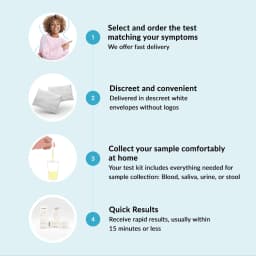
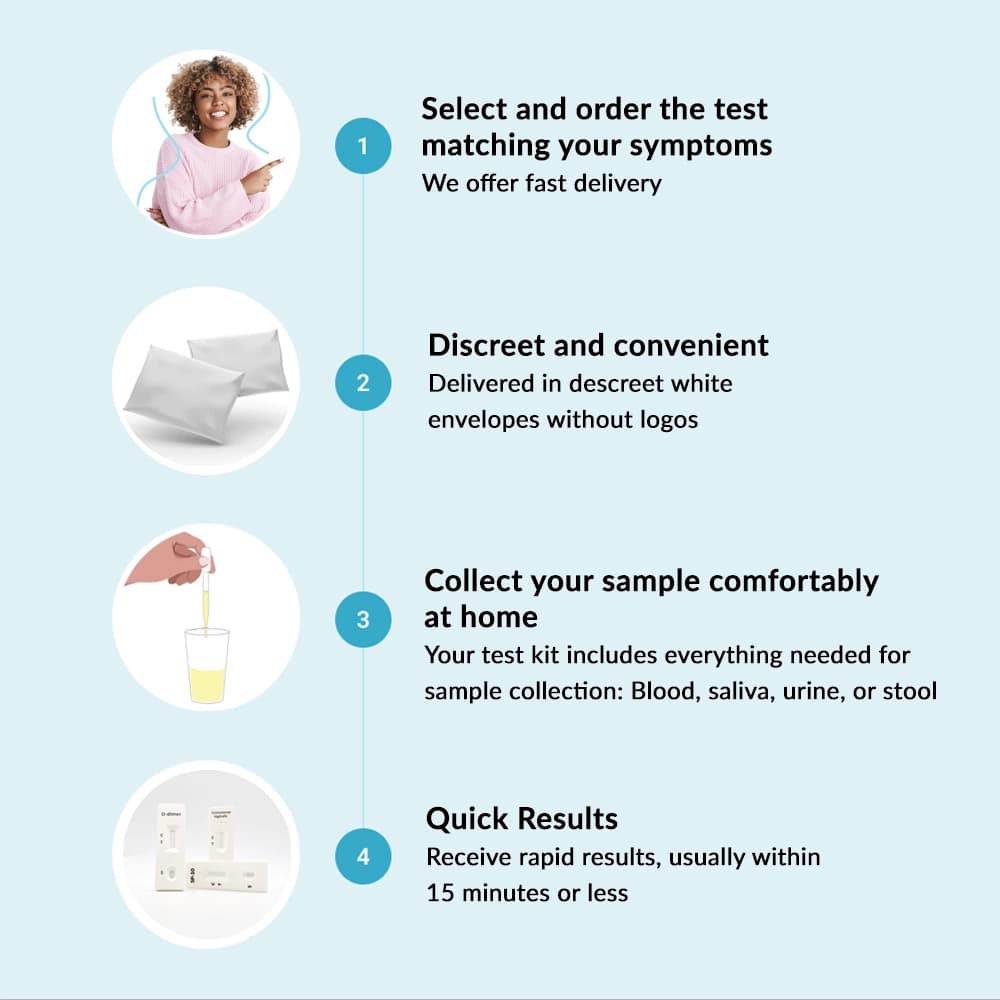
Start by collecting urine in a glass or cup. Take one test strip out of the packaging and hold the end that is completely white without colored squares. Dip the colored part of the test strip into the glass with urine for a maximum of one second. Remove the test strip and gently tap it against the edge of the glass to remove excess urine. Hold the test strip horizontally for 30-60 seconds to allow the reaction to occur. Read your result by comparing the color reactions on the strip with the color chart in the packaging.
Test Limitations
Substances that cause abnormal urine color, such as certain medications, can affect the color development on the test strip. The color development in the reaction area can be masked, or a color reaction may occur in the area that can be visually interpreted as a false positive. Therefore, it is recommended, in doubt, to repeat the test after finishing the medication (after consulting your doctor).
Protein: The minimum sensitivity of this test is 10-20 mg/dL of protein in urine. Highly buffered alkaline urines (pH 9) can give a false negative result. The interpretation of results is also difficult in cloudy urine samples.
Specific Gravity: Elevated specific gravity readings can be obtained in the presence of moderate amounts (100-700 mg/dL) of protein; specific gravity increases with the amount of glucose in the urine.
Creatinine: Low creatinine concentration may be associated with dilution.




 In stock
 Easy to use
 Fast Delivery